Top-Innovator 2026 – top100.de
Scraper - Hydraulic seals

Scraper Seals for
Hydraulic Applications

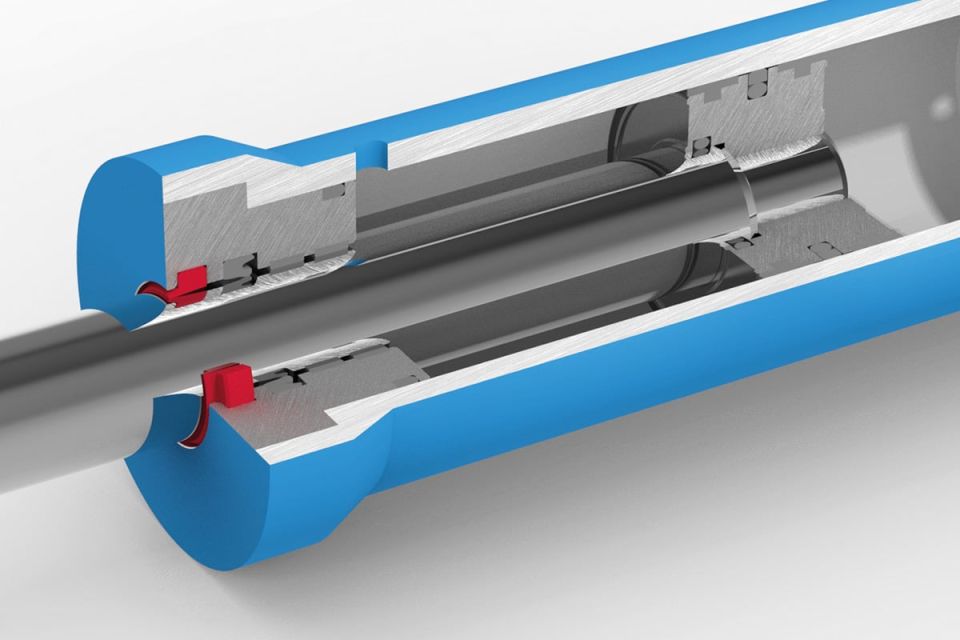
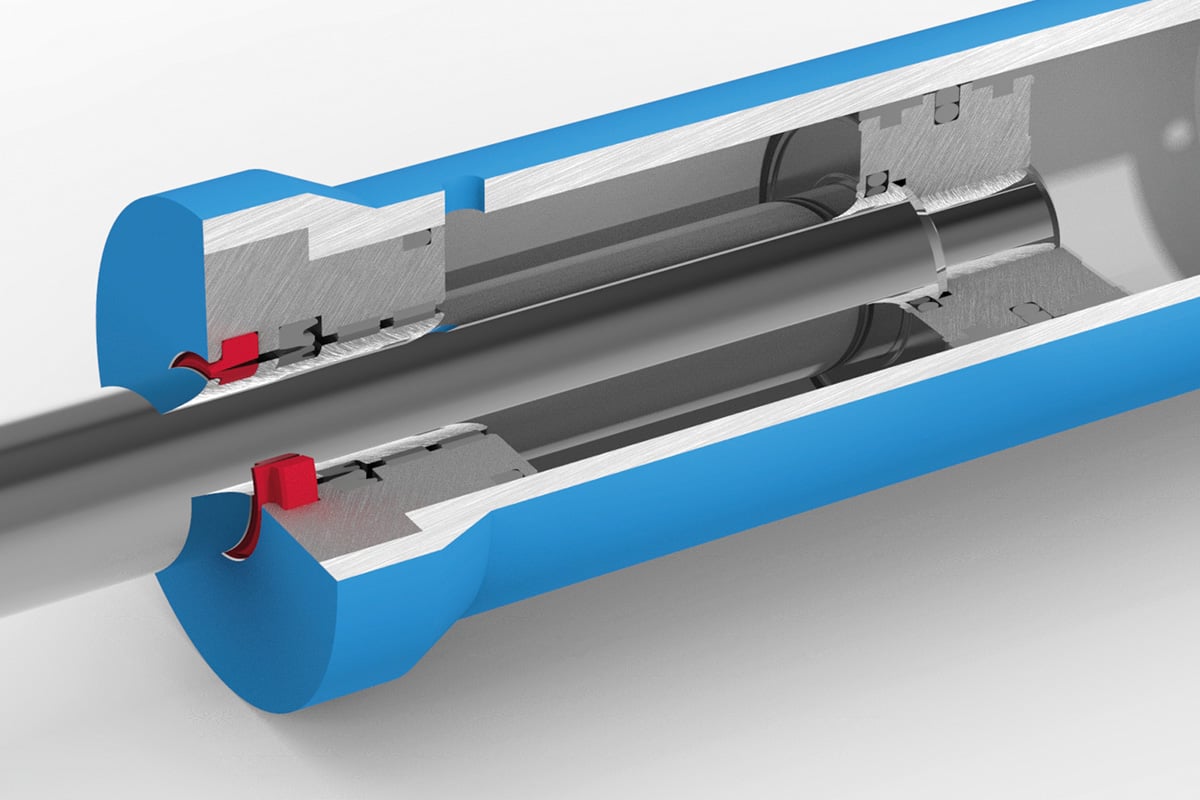
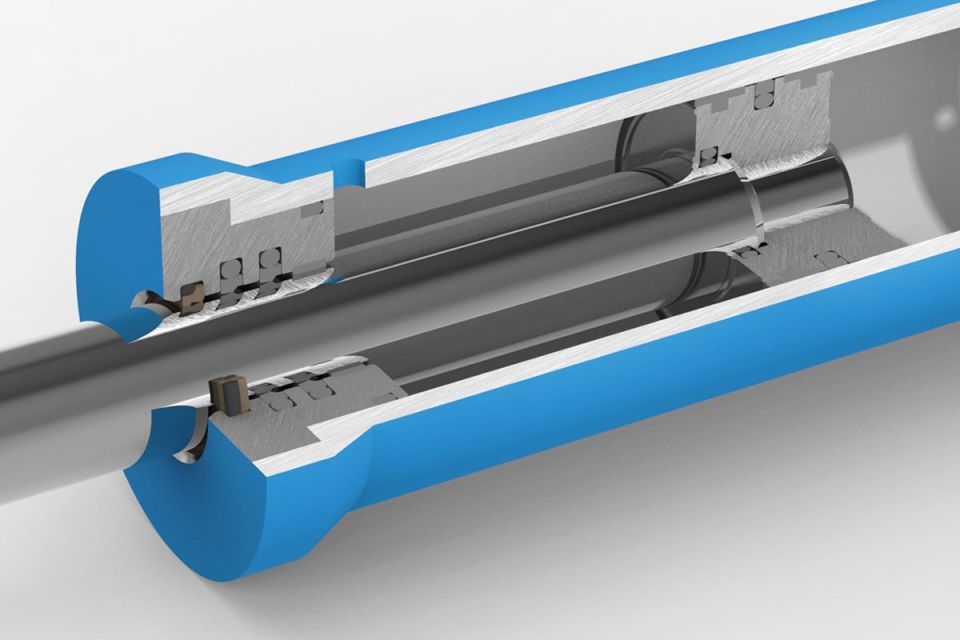
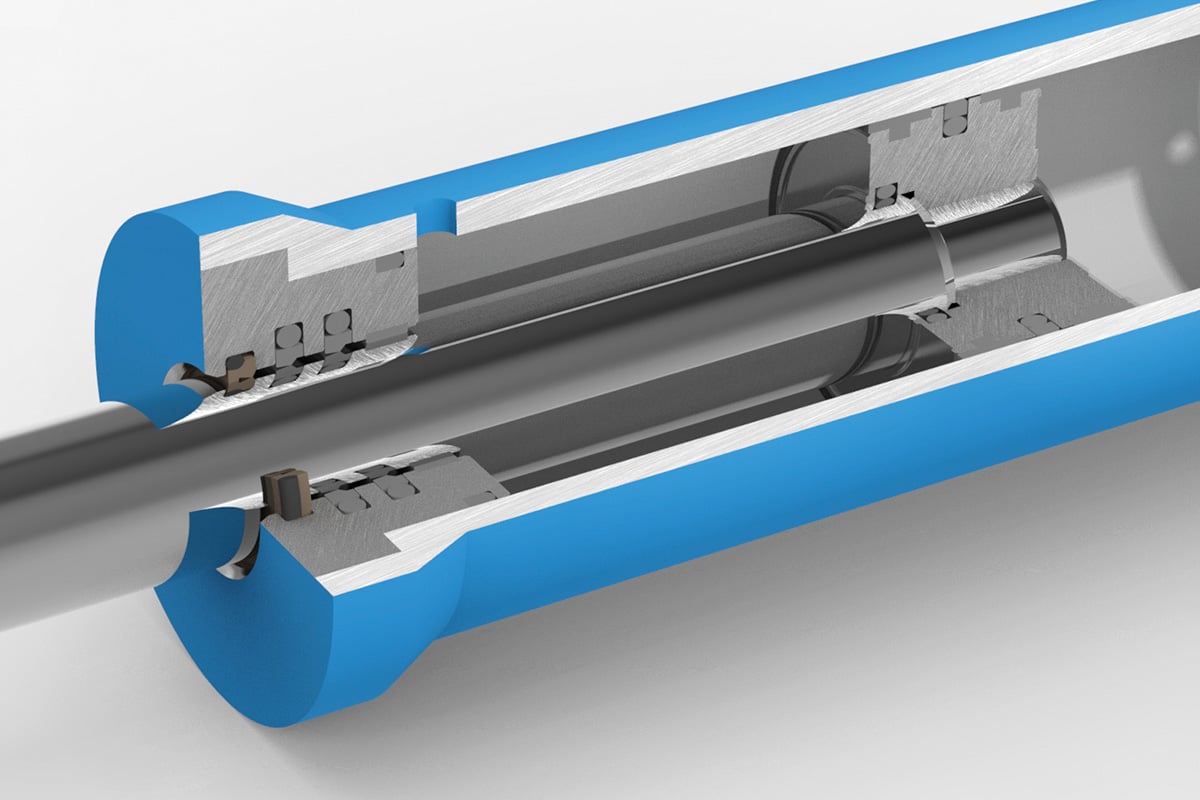
Scrapers are installed in hydraulic and pneumatic cylinders to wipe off dirt, foreign particles, chips, ice, moisture etc. from the piston bar. This prevents contamination of the medium and protects seals, guides and other components.

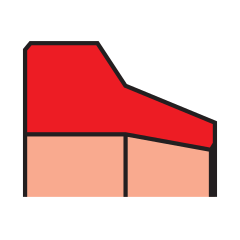
Standard profiles

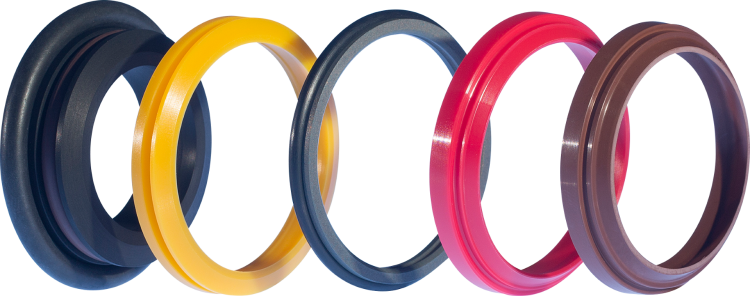
The standard profiles shown below are wipers that represent the state of the art. We manufacture these standard wipers in-house or supply them as moulded parts from approved partners for all required groove dimensions in a variety of materials. Depending on the quantity, the material and your requirements, we offer wipers in the appropriate manufacturing process – everything from one source!

You can find a general overview and further information in the following categories:

  • Standard wipers
  • Scrapers with preload elements
Choosing the correct profile

The more information is known, the better a wiper system can be adapted to a specific application.

A basic distinction is made between single-acting wipers, which protect the hydraulic or pneumatic system from external contamination, and double-acting scrapers, which must also be seen as part of the sealing system in interaction with the seals.

To choose the right profile and the optimal material, the following criteria are important:

  • installation space
  • temperature range
  • medium
  • lifting speed
  • counter surface
  • installation option
  • friction behaviour
  • service life expectancy
  • price and availability

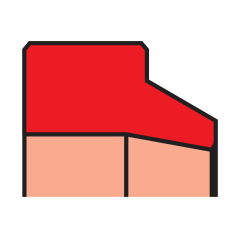
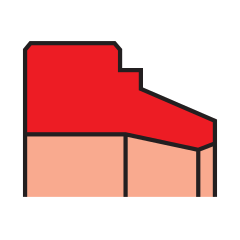
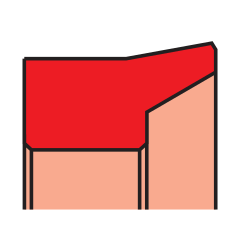
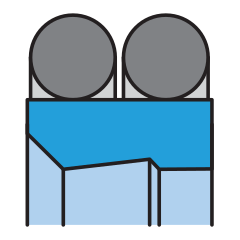
Standard scrapers

Standard scrapers
Application
  • high efficiency
  • suitable for all areas of hydraulics and pneumatics
  • single-acting: to wipe off dirt and moisture, for example
  • double-acting, to additionally reduce the lubricant film discharge
  • can be mounted in open and closed grooves
  • many dimensions available as molded parts
  • double wipers must be matched to the sealing system used
Sliding speeds:

up to 1 m/s

Temperature range:

-55 to +220 °C (depending on material)

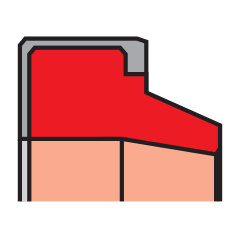
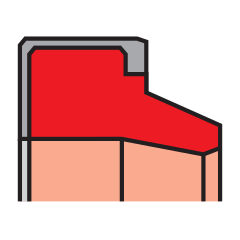
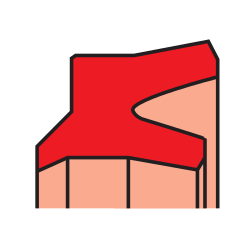
Scrapers with elastomer preload elements

Scrapers with leader elements made of elastomer
Application
  • for all areas of hydraulics and pneumatics
  • single-acting: to wipe off dirt and moisture, for example
  • double-acting: to additionally reduce the lubricant film discharge
  • low friction
  • wide range of materials
  • also largest diameters, intermediate sizes and inch dimensions can be realized
  • mounting in closed grooves from diameter
  • 20 mm possible
  • double wipers must be coordinated with the sealing
  • system used
  • heavy-duty wipers available, e.g. DA130
Sliding speeds:

up to 15 m/s

Temperature range:

-55 to +280 °C (depending on material)

Frequently Asked Questions about scrapers

What is a scraper?

A scraper is a sealing element that is installed in hydraulic or pneumatic cylinders and wipes dirt, moisture, and foreign particles from the piston or rod surface before they enter the cylinder system. In this way, it protects the medium and subsequent seals from contamination.

How do scrapers seal?

A scraper is mounted at the entry/exit area of the piston or rod and provides sealing by scraping off dirt, moisture, or foreign particles when the rod retracts. In this way, it prevents these from entering the cylinder, protects seals as well as guides, and contributes to the operational reliability of the system

What types of scrapers are there?

Scrapers are roughly classified according to mode of action, design, and material
Category Generic examples Description
Mode of action Single-acting / Double-acting Protection against external particles / additionally retention function for fluid film
Design Press-fit / Snap-in For open or closed installation spaces
Material Elastomer / Polyurethane / PTFE For different temperatures, media, and wear requirements
Where can I buy scrapers?

Scrapers can be requested from Hänssler Kunststoff- und Dichtungstechnik via the contact form, by phone, or by email. In addition to standard profiles, Hänssler specializes in manufacturing custom profiles and can use high-performance plastics for demanding applications.

Color contrast
Text
Highlighting content
Zoom