Back-up rings – Static seals

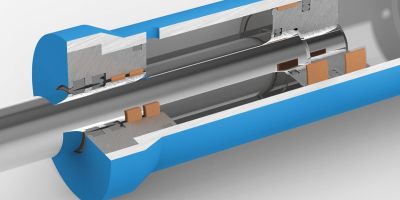
Back-up rings increase the compressive strength of a sealing system. An active back-up ring is pressed axially and radially by the seal in the direction of the sealing gap and covers it. A passive back-up ring lies parallel to the seal, is axially pressurized, and is also intended to cover the seal gap and prevent extrusion of the seal material into the seal gap. The use of back-up rings is recommended for static O-ring seals from 200 bar with pulsating pressure or if a pressure-dependent seal gap change must be expected.
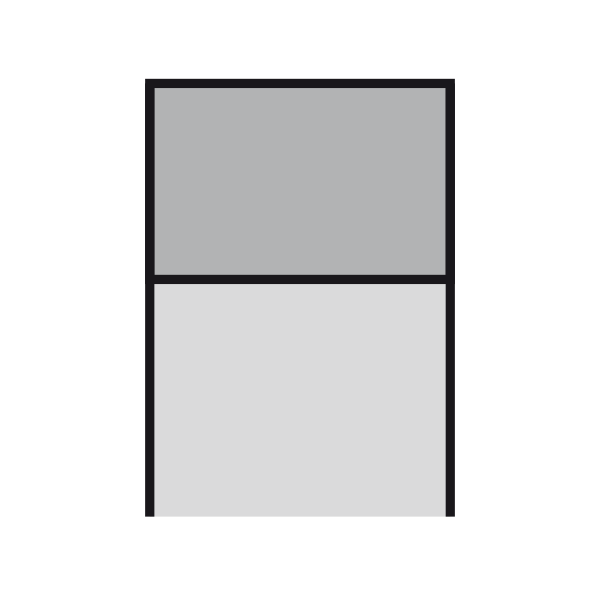
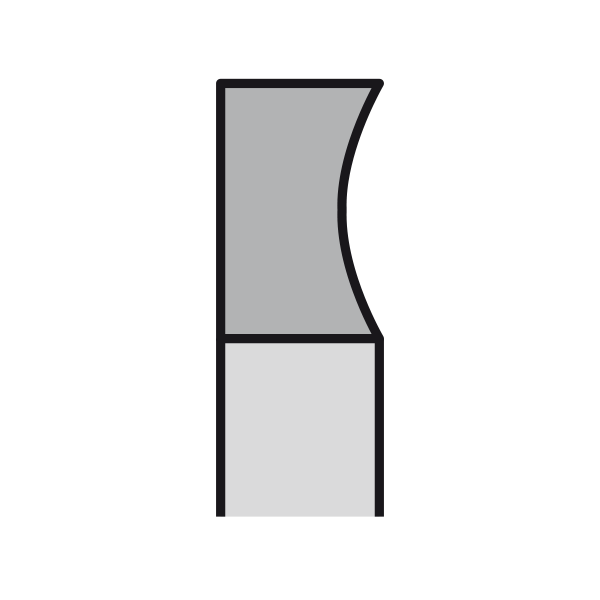
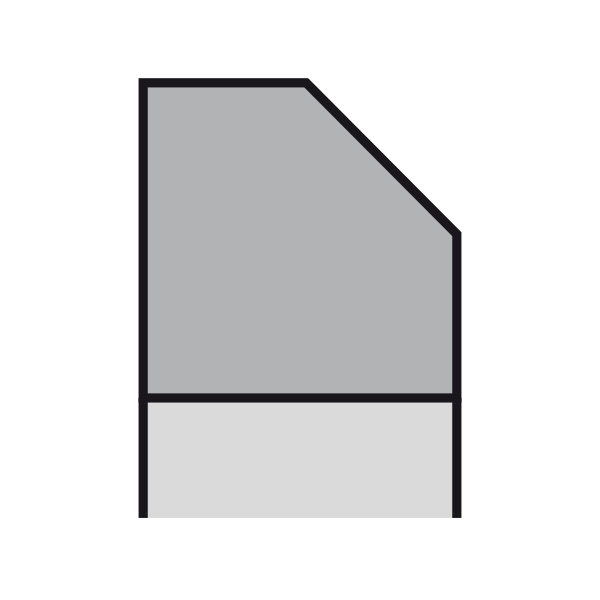
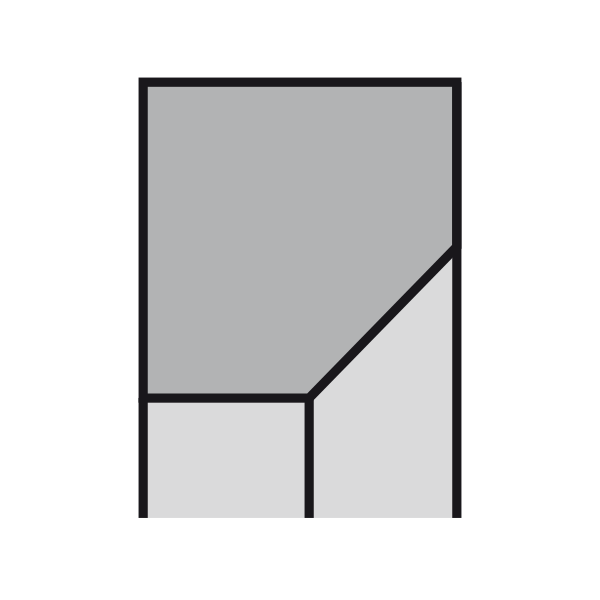
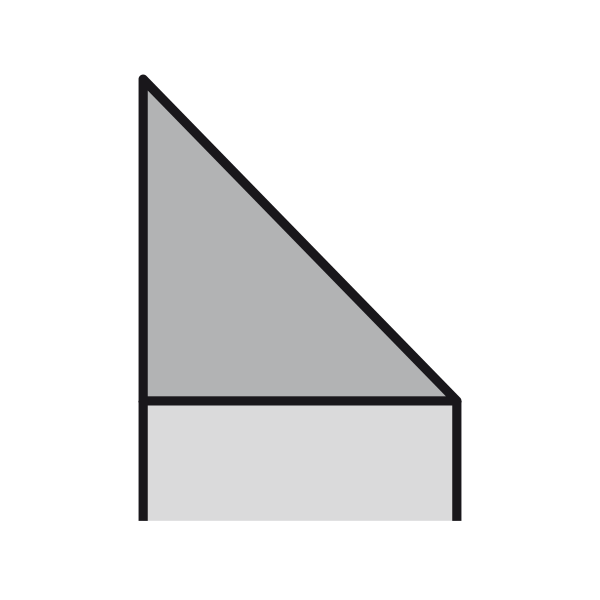
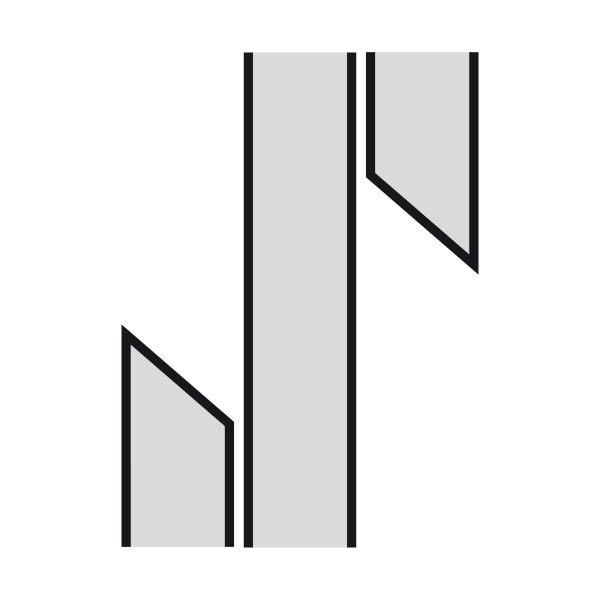
Standard profiles
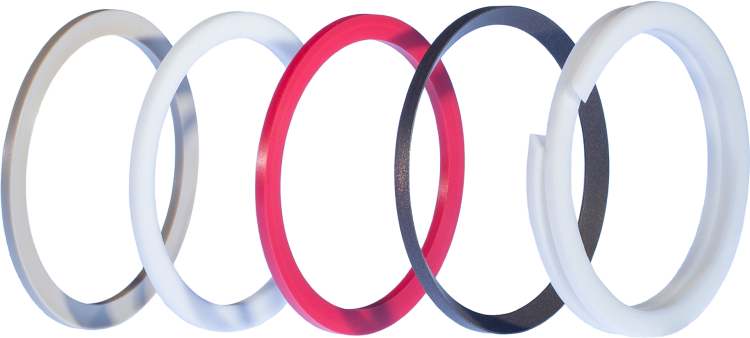
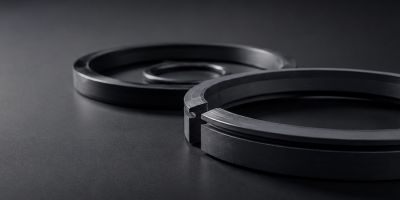
By the standard profiles shown, we mean back-up rings that represent the state of the art. We manufacture these support rings in Mannheim for all required groove dimensions from a variety of materials up to a diameter of 3000 mm.
Back-up rings are usually installed together with O-rings. For higher pressure ranges, however, piston seals and rod seals with back-up rings are increasingly being used.
Choosing the correct profile
The more information is known, the better a sealing system can be adapted to a specific application.
To choose the right profile and the optimal material, the following criteria are important:
- installation space
- double-acting or single-acting
- internal or external sealing
- pressure range
- temperature range
- medium
- counterface
- mounting option
- friction behavior
- tightness
- service life expectancy
- price
- availability
Frequently Asked Questions about back-up rings
Back-up rings are dimensionally stable rings that are usually inserted into the groove together with O-rings. They cover the sealing gap and prevent the seal from being forced into the gap under high or pulsating pressure (gap extrusion).
Back-up rings are used to increase the compressive strength of a sealing system and to cover the seal gap so that the sealing material does not extrude into the gap under pressure. They are usually used in conjunction with O-rings and, depending on the pressure level, are also used in piston and rod seals.
O-rings require a Back-up ring if there is a risk of gap extrusion, which is typical in cases of high pressure (as a guideline for static applications: from approx. 200 bar), larger sealing gap/clearance, pulsating pressure, pressure-induced gap change or dynamic movement. If the pressure acts only on one side, one Back-up ring on the low-pressure side is usually sufficient; if pressure acts on both sides, two Back-up rings are often used.

Back-up rings are installed together with the O-ring in the same groove. Before installation, the groove and edges are deburred, the components are cleaned and, if necessary, lightly lubricated. The back-up ring is then inserted completely into the groove without twisting or squeezing it. Slotted or spiral-shaped back-up rings are snapped in or wrapped around. Closed back-up rings are briefly expanded with a cone or expansion mandrel and then inserted into the groove.
Back-up rings can be requested from Hänssler Kunststoff- und Dichtungstechnik via the contact form, by phone, or by email. In addition to standard profiles, Hänssler specializes in manufacturing custom profiles and can use high-performance plastics for demanding applications.