Top-Innovator 2026 – top100.de

LFAM – Large Format Additive Manufacturing

The future of manufacturing technology for technical plastic parts

You are seeing a placeholder for Vimeo. Unlocking will share data with third parties.

More Information

You have BIG ideas – we manufacture them in plastic with LFAM

Large Format Additive Manufacturing combines our many years of expertise in subtractive manufacturing and additive manufacturing.

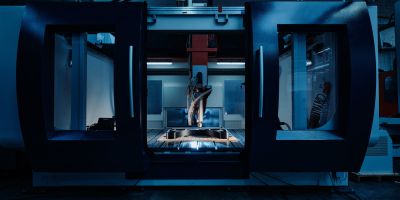
This hybrid manufacturing process starts additively, with the 3D printing of a near-contour blank. In the first step, plastic granulate is melted and built up layer by layer using an extruder. This part is also known as fused granulate fabrication FGF or pellet extrusion. This is followed by the subtractive part, the post-processing of the printed blank in order to achieve the desired properties. The blank is processed using 5-axis CNC milling and the excess material is removed.

LFAM enables the realization of complex geometries and individual designs as well as the combination of different materials in one component. The process is particularly suitable for prototypes, small series and custom-made products in various industries.

As an experienced provider of innovative sealing and plastic solutions, we have extensive expertise in the field of large format additive manufacturing. We are happy to support our customers in the development and implementation of their projects and work with them to find the optimum solution for their individual requirements.

Our experts are there for you!
Sebastian Hänssler
Alexander Weber
Stefanie Schramm

The advantages of Hänssler Large Format Additive Manufacturing (LFAM)

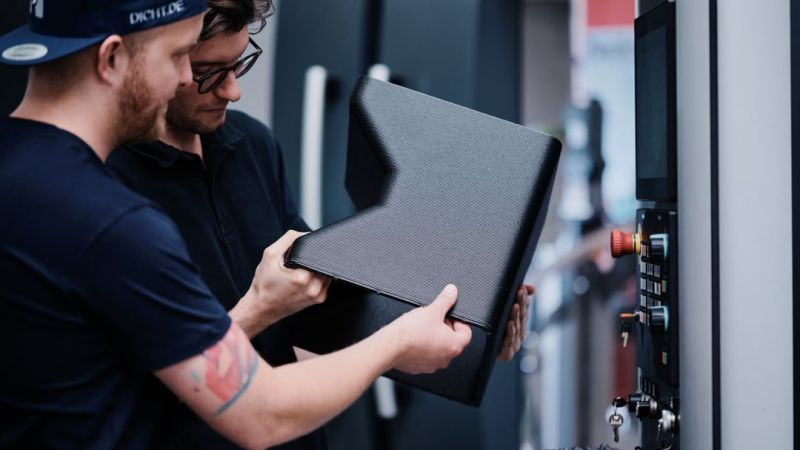
Two employees inspect a large LFAM-fabricated dark component

1. Larger components

Large format additive manufacturing is revolutionizing the production of large components. The hybrid process makes it possible to produce large, customized and complex parts that cannot be produced using conventional technologies and milling processes. Until now, these were not available due to size restrictions on semi-finished products. LFAM opens up new horizons for companies that rely on large, customized parts.

2. Efficiency

LFAM combines additive and subtractive manufacturing processes in a single system. This enables a faster production process with lower costs and improved efficiency. Near-contour printed blanks minimize material consumption and processing time, saving resources and costs enormously.
The high printing speed enables faster production of large parts, which in turn leads to increased production speed. Thanks to optimized processes, throughput times are shorter and operating costs are lower.
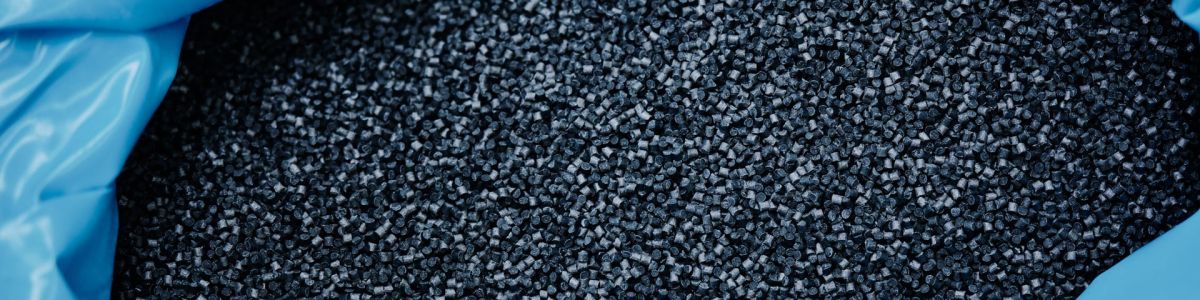

Material for LFAM

3. Material variety

Basically, all thermoplastics can be processed, already released are for example the following materials:
rPETG+GF

rPETG + GF this is an environmentally friendly material consisting of recycled PETG plastic and glass fibres. This composite material combines the good printability and environmental friendliness of rPETG with the increased strength and stiffness of glass fibres, making it an excellent choice for demanding LFAM components.

ABS+CF
ABS+CF stands for acrylonitrile butadiene styrene with carbon fibre reinforcement. It is a composite material that combines the lightness and strength of carbon fibre with the good processability and durability of ABS plastic. This material offers improved mechanical properties and is ideal for applications that require high strength and rigidity.
PC+CF
PC+CF stands for polycarbonate with carbon fibre reinforcement. This composite material combines the high impact strength and excellent heat resistance of polycarbonate with the high strength and lightness of carbon fibre. It is ideal for engineering plastic parts that require high mechanical strength, dimensional stability and heat resistance.
PEI+CF

PEI+CF stands for polyetherimide with carbon fibre reinforcement. This composite material combines the excellent thermal and chemical resistance of PEI with the high strength and stiffness of carbon fibres. It is ideal for demanding LFAM composite components that require high performance at high temperatures and under harsh conditions.

PESU+CF

PESU+CF stands for polyethersulfone with carbon fibre reinforcement. This composite material combines the excellent heat resistance and chemical stability of PESU with the high strength and lightness of carbon fibres. It is ideal for demanding LFAM applications that require high performance under extreme conditions, including high temperatures and aggressive chemical environments.

Our experts are there for you!
Sebastian Hänssler
Alexander Weber
Stefanie Schramm

Our core competencies in the field of LFAM

A cogwheel filled with puzzle pieces that interlock with each other
Selection
of the right material
A treasure map with a tower
Selection of the right manufacturing process
A ticked off checklist
Quality from our own production – everything from a single source
Sub-areas of a process linked by lines in a process flow diagram
networked
processes
a stopwatch
Flexible and on-time production
A delivery van with a clock
Short and exact delivery times
Selection of the right material
Selection of the right manufacturing process
Quality from our own production – everything from a single source
networked processes
Flexible and on-time production
Short and exact delivery times

    The LFAM process from Hänssler enables us to produce a very large positive mold with optimum surface quality and maximum precision. It forms the basis for the production of the carbon monocoque for our racing car next season. We also received professional support and expert advice at all times during the development work and the selection of the right material.

    Frequently Asked Questions about Large Format Additive Manufacturing (LFAM)

    What is Large Format Additive Manufacturing (LFAM)?

    Large Format Additive Manufacturing (LFAM) is a manufacturing process that combines additive and subtractive techniques to produce large scale parts from thermoplastic materials. It is particularly suitable for the production of parts that are difficult to produce using conventional manufacturing methods due to their size or complexity.

    What are the advantages of the LFAM process?

    LFAM offers a number of advantages, including the ability to produce large parts quickly and efficiently, the use of a wide variety of materials, high precision and quality, and significant cost savings by reducing material consumption and waste.

    In which application areas is LFAM mainly used?

    LFAM is mainly used in sectors that require large, customised parts, such as aerospace, automotive, shipbuilding and wind energy.

    What potential does LFAM offer for industrial companies?

    LFAM offers industrial companies the potential to optimise their production processes, reduce costs, improve product quality and develop innovative products that would not be possible with conventional manufacturing methods.

    How does LFAM affect environmental aspects?

    LFAM has a positive impact on environmental aspects as it reduces material consumption and waste, improves energy efficiency and offers the possibility to use recycled or bio-based materials.

    How can LFAM contribute to cost savings?

    LFAM can lead to significant cost savings by shortening production times, reducing material consumption and waste, and eliminating the need for additional assembly or joining steps. It can also lead to indirect cost savings by improving efficiency and productivity.

    How can LFAM contribute to improving product quality?

    LFAM can improve product quality by offering high precision and surface quality, as well as the ability to create complex internal structures and geometries that would not be possible with traditional manufacturing methods.  It also enables the use of high performance materials and composites that can lead to improved mechanical properties and performance.

    How can LFAM contribute to improving product quality?

    LFAM can improve product quality by offering high precision and surface quality, as well as the ability to create complex internal structures and geometries that would not be possible with traditional manufacturing methods. It also enables the use of high performance materials and composites that can lead to improved mechanical properties and performance.

    How can LFAM help to improve precision and quality?

    LFAM enables high precision and surface quality, even on large parts, thanks to the subtractive component of the process, which removes excess material to achieve the final shape and quality of the part. In addition, additive manufacturing enables the creation of complex internal structures and geometries that can result in parts with improved mechanical properties and performance.

    Color contrast
    Text
    Highlighting content
    Zoom