 Scrapers
 Rod seals
 Piston Seals
 Guide rings
 Back-Up rings
 O-Rings / X-Rings
 Flat seals
 Spring-loaded seals
 Radial shaft seals
 Rotary seals
 High pressure seals
 Sealing sets
 O-ring measuring towers
 Turned parts
 Milled parts
 Turned and milled parts
 Bushes or bearings


 Large format 3D printing
 Post-processing of 3D printed parts
 Heat-resistant 3D printed components
 Plastic Components with Flame Retardancy





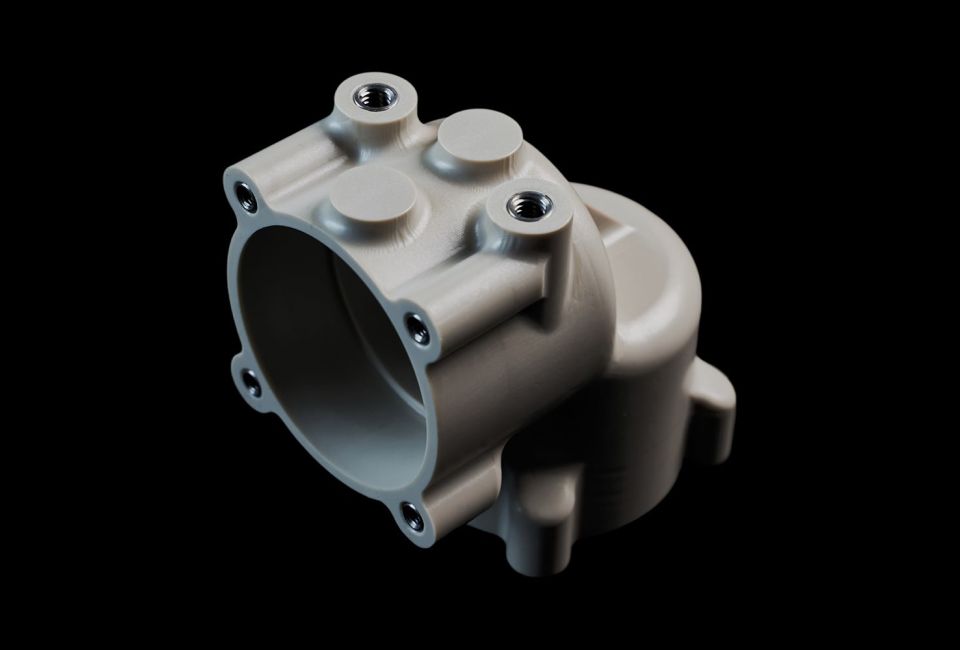
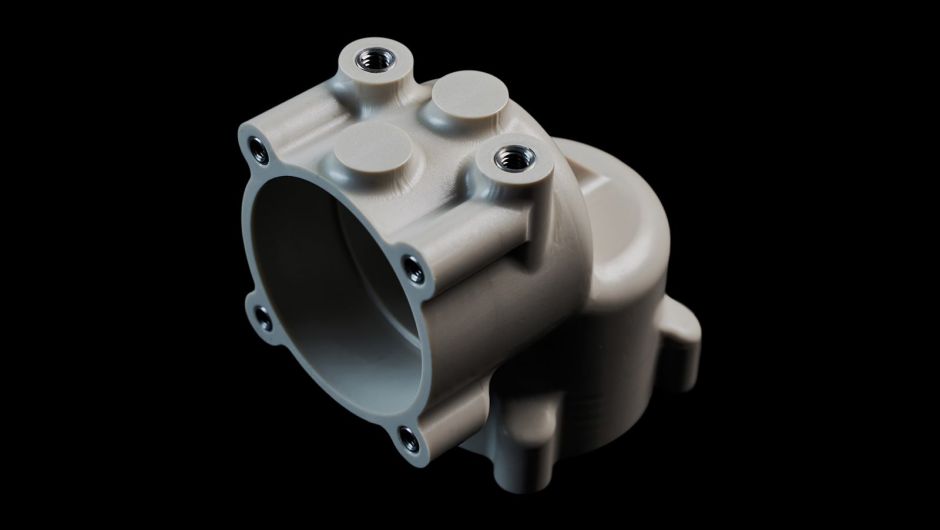
Polyetheretherketone (PEEK) is the best-known member of the PAEK family of materials. Under continuous operation, it retains its mechanical properties up to 240–260 °C and does not melt until around 343 °C. The glass transition temperature is 143 °C. Above this temperature, stiffness and strength decrease measurably. PEEK is resistant to most organic and inorganic chemicals and remains hydrolysis-resistant up to about 280 °C.
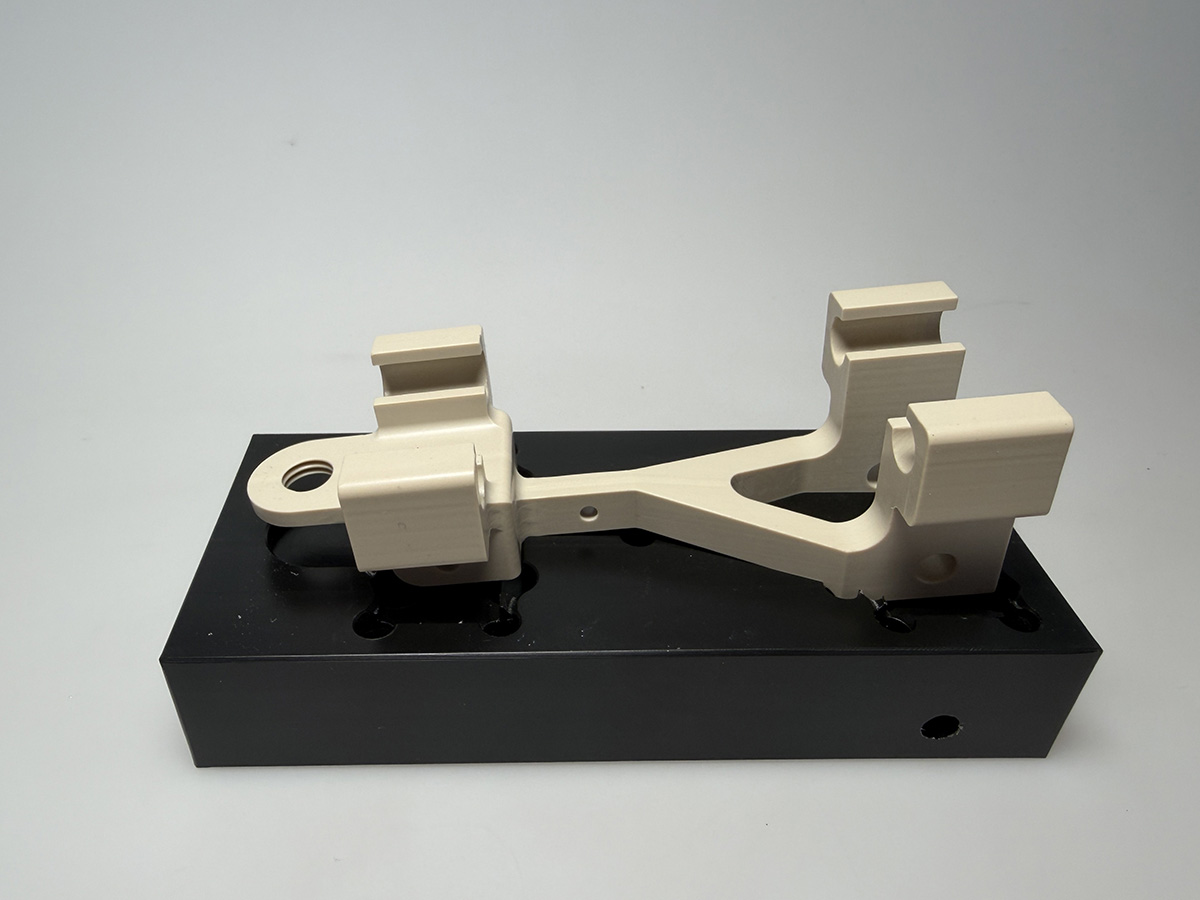
Because of these properties—which hardly any other engineering plastic can match—PEEK milled parts are used in applications where a component is simultaneously exposed to high temperatures, corrosive media, and mechanical stress. In semiconductor manufacturing, for example, these include mounts and insulators; in aerospace, bearing cages and hydraulic components; and in the chemical industry, pump and valve parts. In mechanical engineering, they replace metal bearings and sliding elements; in sealing technology, they withstand pressures and temperatures at which elastomers have long since failed.


Send us your drawing or give us a call
As your development partner, we’ll work with you to assess your application and recommend the right PEEK compound for your PEEK machined part.
Machining of LMPAEK™
LMPAEK™ is a plastic developed by Victrex specifically for 3D printing that has a property profile very similar to that of PEEK. This makes LMPAEK™ suitable for the LFAM process. Compared to PEEK, LMPAEK™ has a melting point that is about 40 °C lower, can be processed over a wider temperature range, and crystallizes more slowly. It is primarily the slower crystallization that makes the difference: the printed layers bond better, and the blank emerges from the printer with less internal stress. We can have a partner print LMPAEK™ blanks with close-to-contour shapes and then mill or turn them on our own machines. This gives us much greater flexibility in terms of the available semi-finished part sizes.