 Scrapers
 Rod seals
 Piston Seals
 Guide rings
 Back-Up rings
 O-Rings / X-Rings
 Flat seals
 Spring-loaded seals
 Radial shaft seals
 Rotary seals
 High pressure seals
 Sealing sets
 O-ring measuring towers
 Turned parts
 Milled parts
 Turned and milled parts
 Bushes or bearings


 Large format 3D printing
 Post-processing of 3D printed parts
 Heat-resistant 3D printed components
 Plastic Components with Flame Retardancy






LFAM – potential for your company



Variety of materials and flexibility
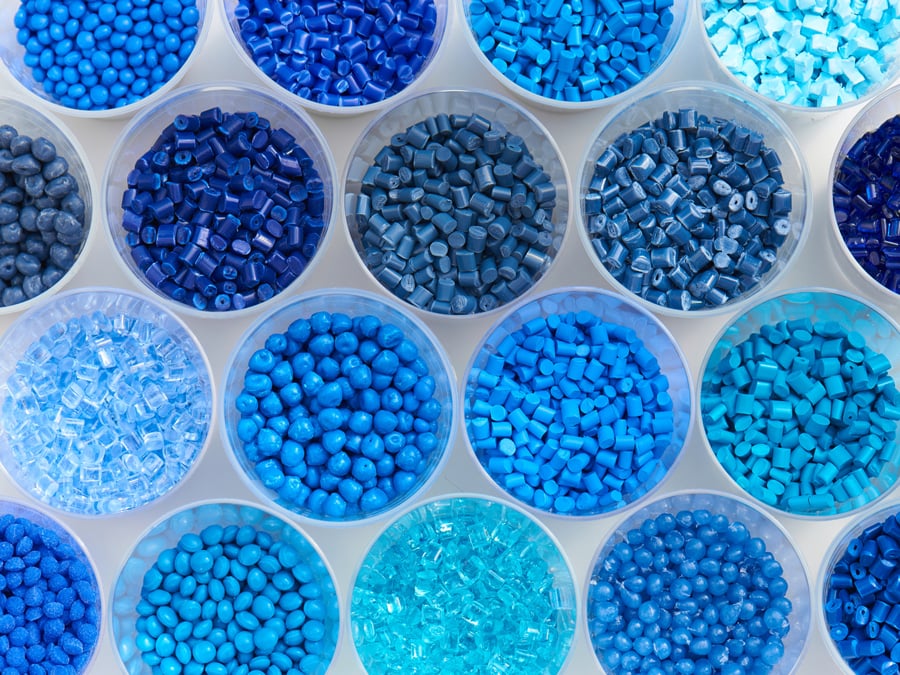
LFAM opens up new possibilities in the production of technical components. One of the outstanding features of industrial 3D printing is its ability to process a wide range of materials. From classic thermoplastics to high-strength composites and special engineering plastics – large-format 3D printing offers an impressive variety of materials.
This diversity enables companies to produce components with customized properties. Whether high strength, temperature resistance, chemical resistance or special electrical properties – by choosing the right material, components can be optimally adapted to their application. This opens up completely new possibilities in product development and enables the production of specific parts that would not be possible using conventional processes.
In addition, LFAM can also process recycled or bio-based materials, making it a more environmentally friendly option for additive manufacturing. This can help companies achieve their sustainability goals and reduce their environmental impact.
Cost savings and economic efficiency
Large volume 3D printing offers companies significant cost savings and increases production efficiency. One of the main reasons for this is the efficient use of materials in large-format industrial 3D printing. In contrast to subtractive manufacturing processes, in which material is removed, large-format additive manufacturing involves a layer-by-layer build-up that only uses the material that is actually required. This allows material costs to be reduced by up to 90%.
Another advantage of LFAM is the savings in labor costs. The high level of automation of the process and the ability to produce complex geometries in one piece eliminate the need for time-consuming assembly and post-processing steps. This leads to a significant reduction in working time and the associated costs.
The time savings also contribute to the cost-effectiveness of industrial 3D printing. The rapid production of prototypes and small batches enables companies to bring their products to market faster and thus gain a competitive advantage. In addition, long waiting times for the production of tools and molds are eliminated, which further shortens the time-to-market.
Last but not least, LFAM leads to a reduction in storage costs. As parts can be manufactured on demand, there is no need to keep large quantities of spare parts and components in stock. This not only reduces storage costs, but also improves the company’s flexibility and responsiveness.
Overall, Large Format Additive Manufacturing offers enormous potential for cost savings and increased efficiency in industrial production. Companies that use this technology can significantly improve their competitiveness and grow profitably in the long term.
Environmental aspects of LFAM
LFAM technology offers several environmental and sustainability benefits that are important to industrial companies.
Efficient use of material
Large Format Additive Manufacturing enables precise control of material application, resulting in only as much material being used as is required to produce the part. This reduces material consumption and minimises waste, resulting in a lower environmental impact.

Recycling and reuse
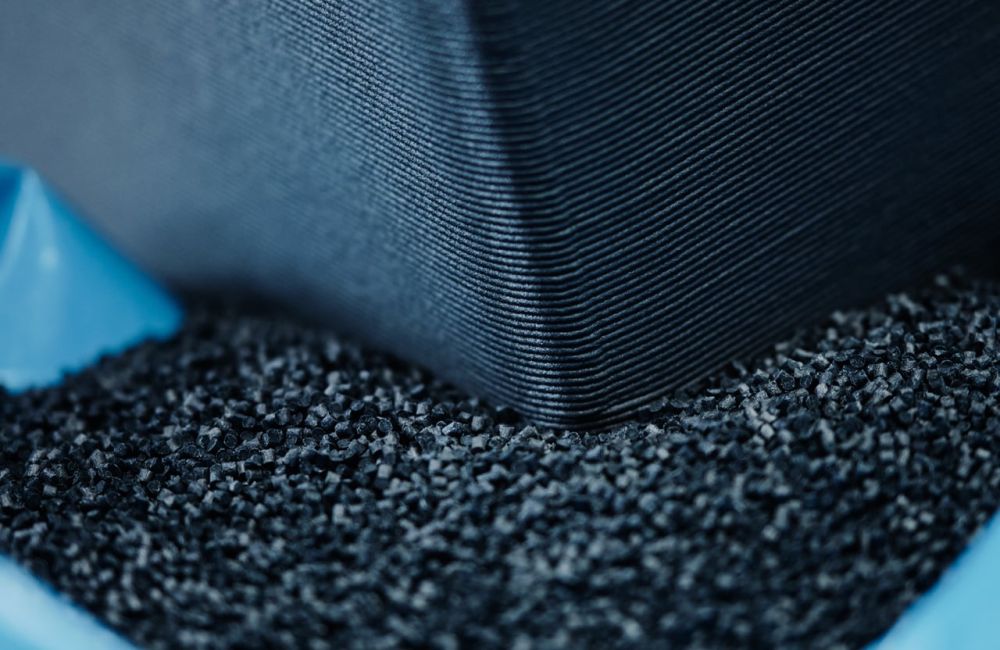
Our LFAM system can process recycled plastics. This can help reduce the need for virgin raw materials and reduce the amount of plastic waste.

Energy efficiency
LFAM systems are more energy efficient than conventional manufacturing processes from extruded semi-finished products, especially when producing large parts. This helps to reduce energy consumption and the associated CO2 emissions.

Reduction of transport emissions
The hybrid process uses less material due to the nearcontour printing, the energy consumed in transporting heavy and large semi-finished products is reduced.