Top-Innovator 2026 – top100.de

Vespel® and polyimides (PI)

A special material family for the most extraordinary plastic parts
Vespel® and polyimides (PI)
A special material family for the most extraordinary plastic parts

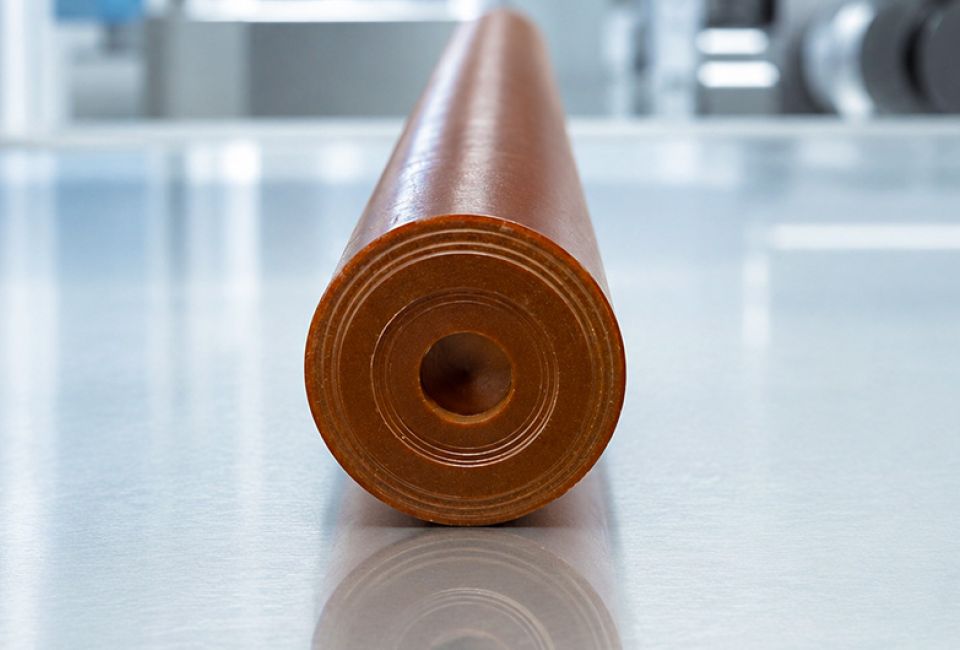
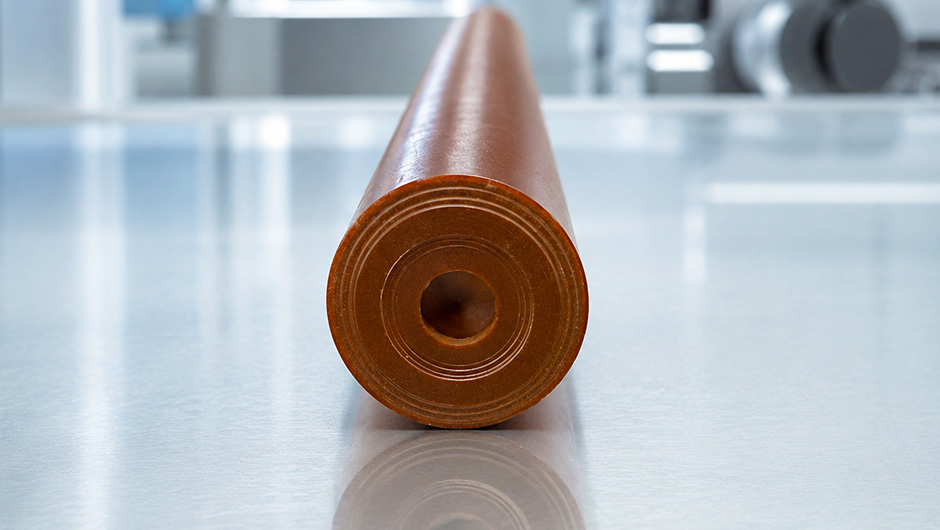
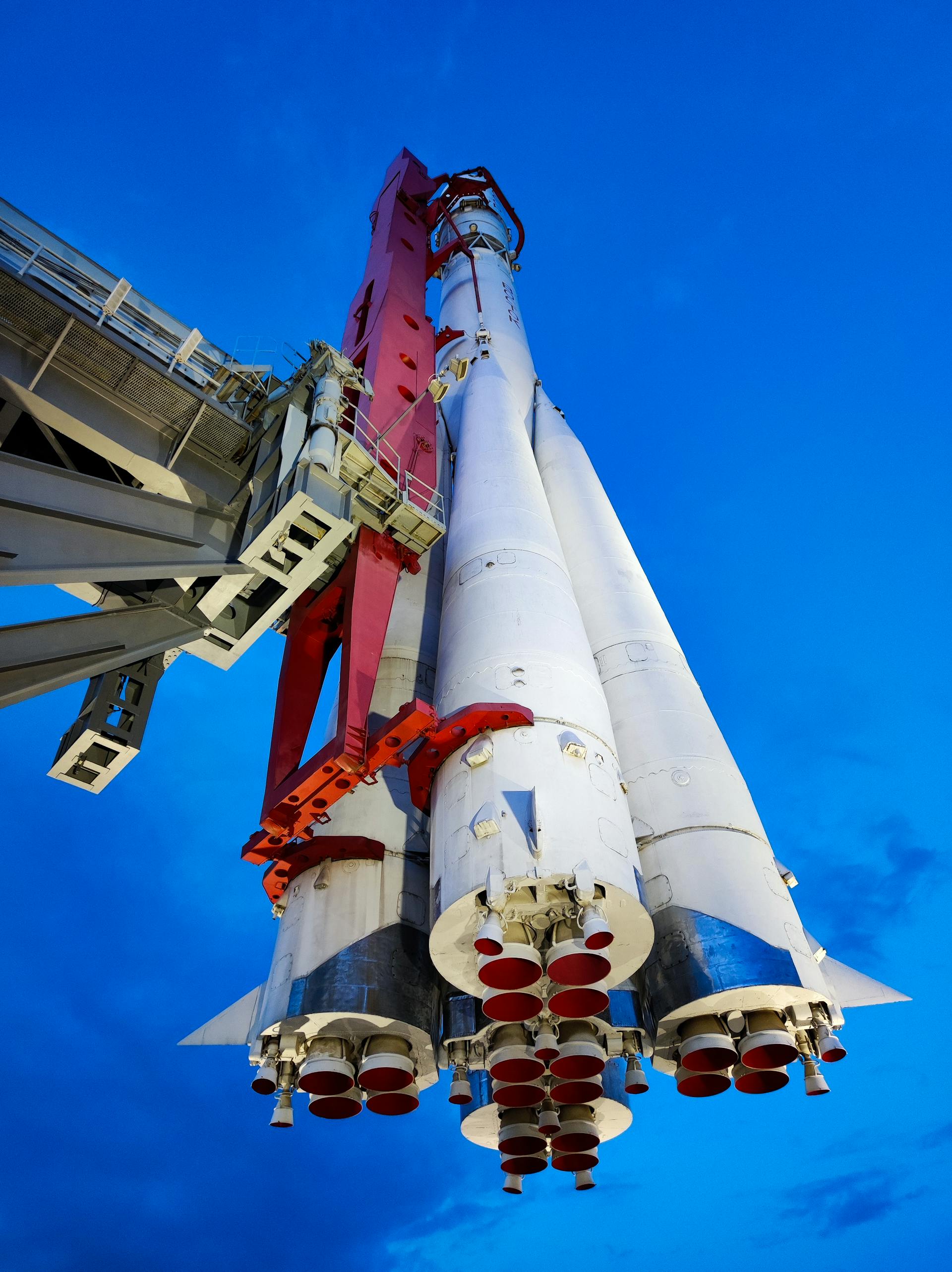
Vespel® is a registered trademark under which DuPont markets various similar polyimide materials. What makes Vespel® unique is that it has no melting point. Furthermore, its glass transition temperature is extremely close to its decomposition temperature. Vespel® can thus be used at temperatures up to 500 degrees Celsius, which is why it is suitable for use in aircraft engines, etching chambers, and rocket nozzles.

In addition to Vespel®, there are also a variety of other polyimides. Polyimide is a class of aromatic high-performance polymers in which imide rings are incorporated into the main chain of the molecular structure. These rings give the material its exceptional thermal and chemical stability.

As a long-standing expert in plastic machining, Hänssler is ideally equipped to process both Vespel® and other high-performance polyimide plastics (such as TECASINT).

Comparison of Polyimide (PI) and Vespel® with PEEK and PTFE

At room temperature, polyimide and PEEK have similar tensile strengths, while PTFE is significantly weaker. The key difference becomes apparent under temperature and sustained load conditions.

As an engineering plastic, PEEK is often the first choice as long as the component temperature remains below 250 degrees Celsius and no ionizing radiation is involved. PEEK can be injection-molded, making it less expensive than Vespel® in mass production, and when reinforced with glass or carbon fiber, it offers excellent mechanical strength. However, it reaches its limit above its melting point of 343 degrees, and under continuous load at 260 degrees, PEEK begins to creep significantly earlier than polyimide.

PTFE is used in other applications. Its coefficient of friction is extremely low, and it remains chemically inert to virtually everything. However, under mechanical load, PTFE exhibits significant creep, even at room temperature. For this reason, it is not suitable as a load-bearing material. Above approximately 260 degrees, PTFE begins to outgas, and decomposition sets in above 400 degrees. Ionizing radiation degrades PTFE significantly faster than polyimide.

The decision-making logic is therefore clear. In the case of components that are subject to sustained high temperatures, radiation exposure, or creep, polyimide is the only viable option. In circumstances where temperatures remain below 250 degrees and high production volumes are a factor, PEEK is often more cost-effective. In scenarios where chemical resistance and low friction are paramount, and the load is comparatively minimal, PTFE emerges as the optimal solution.

The most important Vespel® grades

Vespel® itself is a product family. DuPont offers various grades, each with its own unique properties. Each grade is optimized for a specific set of properties.

The Vespel® SP family

SP-1

Vespel® SP-1 is the base resin of the SP family—pure polyimide without any fillers. As a result, it offers the highest mechanical strength and tensile strength of all SP grades. At the same time, it offers the best electrical insulation properties, making it the top choice for applications where dielectric properties are critical. SP-1 is used wherever maximum structural strength combined with high temperature resistance is required, such as in semiconductor manufacturing or in electrical insulating bushings.

SP-21

Vespel® SP-21 is the most widely used all-purpose material in the SP series. This polyimide is filled with 15 percent graphite, which significantly increases its wear resistance compared to the unfilled SP-1 while simultaneously reducing the coefficient of friction. This makes SP-21 particularly suitable for plain bearings, piston rings, and thrust washers, where moderate friction and good mechanical load-bearing capacity must be combined. Anyone looking for a versatile material for tribological applications under atmospheric conditions usually turns to SP-21 first.

SP-211

Vespel® SP-211 combines 15% graphite with an additional 10% PTFE. This dual-filler composition results in the lowest coefficient of friction in the entire SP series, making SP-211 the preferred choice for guide elements, sliding seals, and applications requiring minimal breakaway torque. The trade-off is lower mechanical load-bearing capacity, as the PTFE slightly reduces the matrix strength. SP-211 is used wherever the lowest possible friction is more important than maximum load-bearing capacity.

SP-22

Vespel® SP-22 has the highest graphite content in the SP family, at 40 percent. It has the lowest thermal expansion of all SP grades and further improved creep behavior under sustained load. However, it has reduced tensile strength because the high filler content displaces the polyimide matrix. SP-22 is used when components must maintain tight tolerances during frequent temperature cycles—typical applications include seal seats, mating parts, and bushings subjected to alternating thermal loads.

SP-3

Vespel® SP-3 is filled with molybdenum disulfide (MoS₂) and was specifically developed for use in vacuum and dry atmospheres. The reason: Graphite requires atmospheric moisture to function as a solid lubricant—in a vacuum, this principle fails. MoS₂, on the other hand, forms a stable lubricating film even without moisture and reliably reduces wear. That is why Vespel® SP-3 is the first choice for satellite mechanisms, space actuators, and vacuum bearings where relubrication is not possible for years.

SCP-5000

Vespel® SCP-5000 belongs to the new generation of SCP materials and, like SP-1, is an unfilled polyimide—but with even greater thermal stability and improved dimensional stability. Its outstanding property is extremely low hydrogen permeation, which qualifies this grade for contact with gaseous and liquid hydrogen. Typical applications include static seals in rocket engines, fuel cells, and the growing H₂ infrastructure.

SCP-5009

Vespel® SCP-5009 is a graphite-filled grade of the new SCP generation with improved tribological properties compared to the classic SP-21. It offers an outstanding combination of high compressive strength and low creep, even under extreme conditions. In addition, it has a low coefficient of thermal expansion, which enables good sealing properties. SCP-5009 is particularly suitable for high-pressure sealing applications.

SCP-50094

Vespel® SCP-50094 is designed for maximum performance under high temperatures and in aggressive environments. This grade has the highest PV limit (pressure × velocity) of all Vespel® grades and combines excellent mechanical properties with wear and temperature resistance. It also offers superior chemical and oxidative resistance, enabling long-term use under aggressive operating conditions.

SCP-5050

Vespel® SCP-5050 is the wear- and high-temperature specialist of the SCP family. Its coefficient of thermal expansion is similar to that of steel, allowing it to function reliably in assemblies with metal mating parts and tight tolerances. At the same time, it offers the lowest CTE and the best wear resistance of all SCP grades. Leading engine manufacturers use SCP-5050 in engine applications to replace metal parts in high-temperature environments.

What distinguishes polyimide from other plastics

Polyimide has five properties that, in this combination, are not found in any other plastic.

Extreme temperature resistance

The first point is temperature resistance. Vespel® operates continuously at 260 degrees Celsius, and in certain bearing applications up to 350 degrees. It can withstand short-term temperature spikes up to 482 degrees without any geometric deformation of the component. Equally important is its performance at low temperatures: Vespel® remains mechanically functional even in cryogenic environments, such as in liquid hydrogen or liquid oxygen. Rocket valve seats made of Vespel® operate within the same assembly at both minus 253 degrees and in the presence of hot gas residual flow reaching several hundred degrees.

Compressive strength at temperature

The second point is compressive strength under temperature. Many plastics can withstand high loads at room temperature, but give way within hours at 200 degrees precisely because they creep. Vespel® also creeps under sustained loads and at high temperatures, but only minimally. For valve seats that are designed to close blow-tight for years, this is the crucial property.

Low density

The third point is its low density. At 1.43 grams per cubic centimeter for SP-1, Vespel® is significantly lighter than any metal capable of withstanding comparable temperatures. In an aircraft engine, which contains hundreds of bushings and washers, this weight advantage adds up to measurable fuel savings.

Radiation resistance

The fourth point is radiation resistance. Only at gamma doses greater than 10⁸ rad do the mechanical properties of Vespel® SP-1 begin to change significantly. This opens up applications for polyimide in nuclear power plants, particle accelerators, and in the radiation environment of satellite orbits.

Space compatibility

The fifth point is outgassing behavior. In a vacuum, polymers generally release volatile components that can fog up optics and contaminate sensors in space applications. Vespel® has low outgassing levels in this regard, but does not automatically meet the strict NASA criteria of the ASTM E595 standard, which requires a mass loss of less than one percent and condensable components of less than 0.1 percent. Vespel®SP-1 falls at the upper end of this range and is often annealed for critical missions; Vespel®SP-3 and the Vespel®SCP series are the better choices when tolerances are tighter. Yes, Vespel® is space-qualified, but selecting the correct grade and performing proper pretreatment are still essential.

Which industries use Vespel® and polyimide (PI)?

Aerospace

The largest single market for Vespel® is aircraft engines. These environments are characterized by sustained temperatures exceeding 300 degrees Celsius combined with high mechanical stress. In the oil system, polyimide parts can be used as static sealing elements. Further forward in the actuators and thrust reversers, guide elements made of Vespel® can withstand both the operating temperature and the alternating mechanical loads of each takeoff and landing cycle.

In the aerospace industry, we recommend Vespel®SP-3 or a similar polyimide configuration. Vespel®SCP-5000 is best suited for static seals in hydrogen and oxygen systems.

Semiconductor manufacturing

The second-largest market is semiconductor manufacturing, specifically plasma etching chambers. These applications require high temperature resistance, low particle emission into the plasma, chemical inertness toward reactive gases, and electrical insulation for sensitive components. Polyimide meets these requirements, and special Vespel® SCP grades further enhance plasma resistance. For chemical-mechanical planarization (CMP), PPS or PEEK compounds are often sufficient.

Oil, Gas, and Hydrogen

In the oil and gas industry, Vespel® is used in downhole valves and high-pressure seals. Today, wells reach temperatures exceeding 200 degrees while simultaneously experiencing pressures of several hundred bar and chemically aggressive media. Vespel® valve seats provide a bubble-tight seal under these conditions and withstand the thermal and mechanical cyclic loads of production operations. Stem packs and polyimide housing components in valve heads round out the picture. In the hydrogen industry—from electrolyzer peripherals to tank fittings—Vespel®SCP-5000 is used due to its low H₂ permeation.

Motorsports and Vehicle Technology

In high-performance vehicles, polyimide turned parts are used in applications where both weight and temperature are critical factors. Vespel®SP-21 is commonly used as a thrust washer in transmissions because it is thinner and lighter than a metal needle bearing, thereby directly saving installation space and weight. In turbochargers, Vespel® bushings guide the wastegate actuators: Exhaust gas temperatures can briefly reach extreme levels, and because Vespel® has no melting point, such temperature spikes do not directly impair its function. Similar applications can be found in dual-clutch transmissions, differentials, and chassis actuators.

Medical technology

Medical applications represent a smaller but growing sector. Polyimide is listed in market overviews for materials tested to USP Class VI. This does not mean that every Vespel® part can automatically be used in a medical device—the biological evaluation according to ISO 10993 is the responsibility of the device manufacturer and applies to the finished, sterilized component. Once this step has been completed, Vespel® parts stand out for their temperature resistance: the material withstands autoclave cycles at 134 degrees Celsius and gamma sterilization without any loss of properties.

Standards and specifications

Anyone who specifies Vespel® in a project relies on a fixed set of standards. The primary material specification in the aerospace industry is SAE AMS 3644H. It defines polyimide-based molded parts in round, sheet, and tubular forms. At the same time, ASTM D6456 serves as the civil standard specification, having replaced the former military standard MIL-R-46198. In the aerospace context, ASTM E595 is the primary outgassing standard, supplemented by the NASA and ESA databases, which track specific material batches.

When is it worth using Vespel® and polyimide?

Vespel® and other polyimides are not all-purpose plastics. The material is expensive, and availability is limited. Anyone who chooses Vespel® or another polyimide plastic (such as TECASINT) has carefully considered the alternatives and found a reason why they are not sufficient. With such expensive materials, we always recommend consulting with and collaborating on development with a plastics expert.

Color contrast
Text
Highlighting content
Zoom