Top-Innovator 2026 – top100.de

FFKM: Choosing the Right Compound

Perfluoroelastomers (FFKM) are the most chemically and thermally resistant elastomers available. They are expensive, but often the only technically viable solution. Not all FFKM compounds are alike. Anyone selecting one must therefore understand which compound suits which application. This article provides an overview of the FFKM products we offer in collaboration with our long-standing FFKM partner, and explains which material fits which use case.

What is FFKM, and where does it set itself apart from FKM?

FFKM (perfluoroelastomer, material code per DIN ISO 1629, also known as FFPM) is the next step up from the familiar fluoroelastomer FKM. The difference is in the polymer backbone: FKM still carries hydrogen atoms along the chain, whereas FFKM is fully fluorinated. The polymer is usually built from tetrafluoroethylene (TFE) and perfluoromethylvinyl ether (PMVE), with a reactive cure site.
FFKM: Choosing the Right Compound

Perfluoroelastomers (FFKM) are the most chemically and thermally resistant elastomers available. They are expensive, but often the only technically viable solution. Not all FFKM compounds are alike. Anyone selecting one must therefore understand which compound suits which application. This article provides an overview of the FFKM products we offer in collaboration with our long-standing FFKM partner, and explains which material fits which use case.

What is FFKM, and where does it set itself apart from FKM?

FFKM (perfluoroelastomer, material code per DIN ISO 1629, also known as FFPM) is the next step up from the familiar fluoroelastomer FKM. The difference is in the polymer backbone: FKM still carries hydrogen atoms along the chain, whereas FFKM is fully fluorinated. The polymer is usually built from tetrafluoroethylene (TFE) and perfluoromethylvinyl ether (PMVE), with a reactive cure site.

Two things follow from that full fluorination. First, near-total chemical resistance: amines, polar solvents, superheated steam, ethylene oxide, propylene oxide, and aggressive oxidizing acids leave it unfazed — no swelling, no breakdown. These are exactly the media that destroy FKM. Second, heat: continuous service runs from +210 to +310 °C depending on the compound, with short spikes tolerated up to +325 °C.

None of this is cheap. Depending on the compound, an FFKM O-ring runs 30 to 200 times the price of an equivalent FKM one. So FFKM only earns its place where FKM, EPDM, or PTFE-based solutions simply can’t do the job — typically when the media are too aggressive, the temperatures too high, the required service life too long without maintenance, or where regulations like USP Class VI or NORSOK M-710 leave no alternative.

Our FFKM Range at a Glance

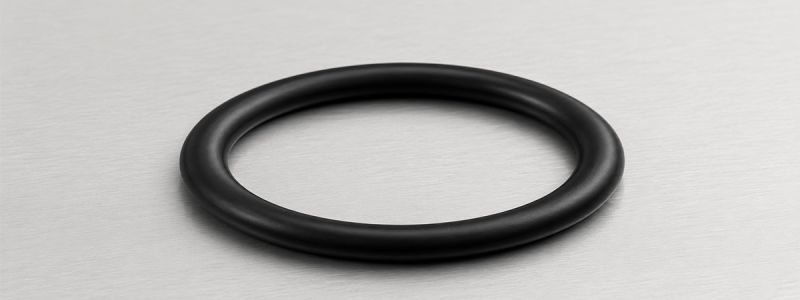
Through our FFKM partner, we have access to a broad range of compounds, which we at Hänssler turn into O-rings in all standard market dimensions as well as custom molded parts. The compound naming usually follows a simple scheme: “G[hardness][suffix].” G75TX, for example, means roughly 75 Shore A, a TX compound for temperature-extreme applications. The suffixes indicate the application class: “P” for semiconductor (plasma/vacuum), “S” for sanitary/pharma, “LT” for low temperature, and “E” for energy/oil & gas.

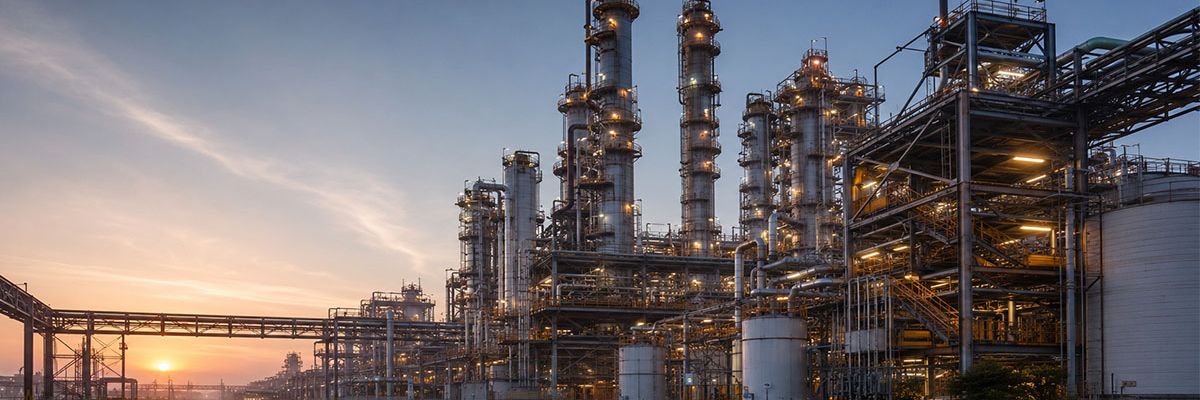
Industrieanlage mit hohen Destillationskolonnen, isolierter Cold Box und weitläufigem Rohrleitungssystem.

Chemical Industry

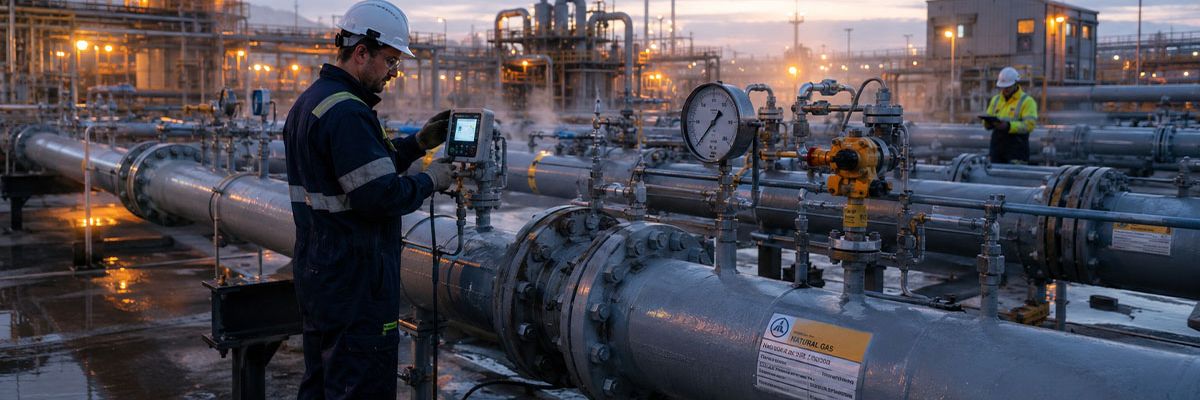
The largest application area for FFKM is the chemical process industry. For standard applications involving acids, alkalis, solvents, and mixed media, the compounds G70A, G75M, G75B, G75TX, and G80A cover the need. G80A is the price-performance all-rounder, with continuous service up to +260 °C. G75M is the softer variant, with particularly good behavior in steam and water. G75B (82 Shore A) suits hot amines, vacuum, and higher mechanical loads. G75TX offers the lowest compression set (just 8 %) and is therefore the first choice for high-temperature chemistry — up to +275 °C continuous and +325 °C short-term.
Oil & Gas and Low-Temperature

Oil and gas applications play by different rules. Two properties matter most here: resistance to rapid gas decompression (RGD, also known as ED) and low-temperature flexibility for subsea use. Three specialized materials are available for this segment:

  • G92E (90 Shore A): qualified to NORSOK M-710 and NACE TM 0297, resistant to methanol, steam, and oils.
  • Ice G75LT (75 Shore A): low-temperature FFKM with a service range down to -46 °C continuous, and briefly even below -80 °C.
  • Ice G90LT (90 Shore A): combines low-temperature performance with RGD resistance to NORSOK M-710. The Ice series has been established in the subsea market for years.
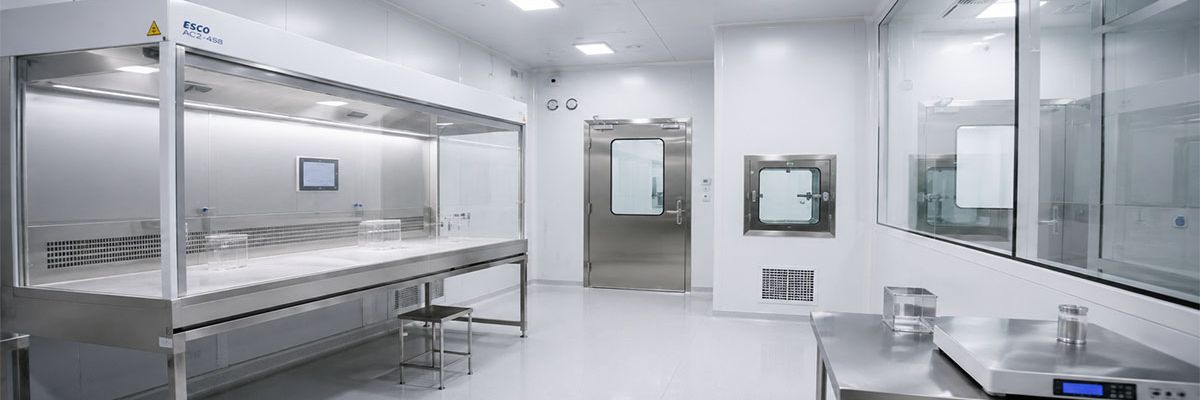
Reinraum-Mitarbeiter inspiziert einen Wafer, eine Kollegin hält ein Tablet, in einer Halbleiterfertigung.

Semiconductor, Vacuum, and Plasma

    • G67P (65 Shore A, translucent): free of inorganic fillers. Suitable for lithography, PVD, CVD, etch, and stripping. Extremely low outgassing.
    • G74P (74 Shore A, translucent): like G67P, but with higher hardness and modulus. Good UV resistance.
    • G75H (80 Shore A, off-white): the specialized plasma material for O₂ and fluorine plasma. Very low helium leak rate, continuous use up to +250 °C, +300 °C short-term.
    Pharma, Food, and Medical

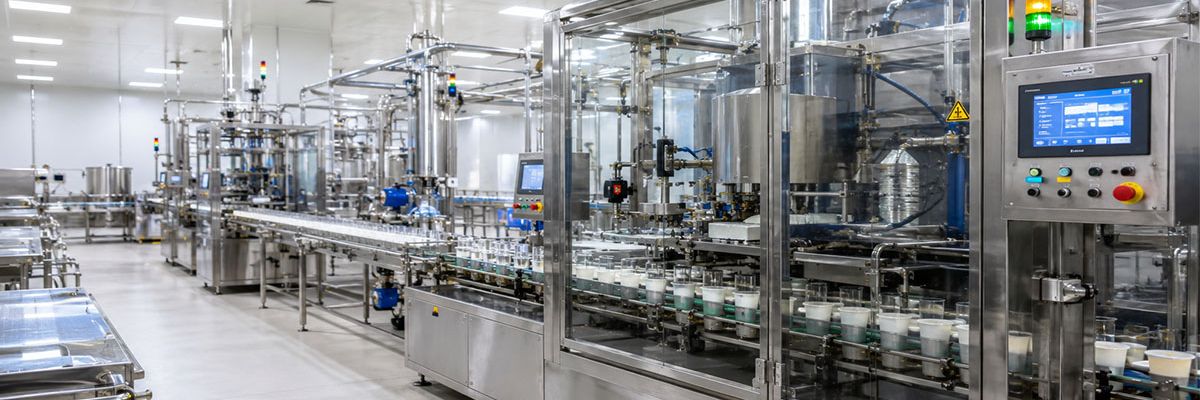
    For hygienically sensitive applications, two specialized compounds are available. Both are colored white (which makes visual inspection for discoloration or contamination easier) and carry the necessary package of FDA, USP Class VI, EC 1935/2004, and 3-A Sanitary 18-03 (Class 1) approvals.

    • G74S (75 Shore A, white): suitable for CIP/SIP/WFI processes. USP Class VI compliance is tested up to +121 °C. Suitable for static and dynamic seals in pharmaceutical, food, and medical technology. ADI-free and TSE/BSE-free.
    • G75S (80 Shore A, white): higher hardness, mechanically usable up to +310 °C. USP compliance, however, applies only up to +70 °C. Anyone wanting to use the material in SIP applications above this temperature must validate that independently.

    A note on temperature limits: marketing figures such as “up to +327 °C” often refer to short-term peak temperatures. For design with a safety margin, always use the continuous-service value from the individual datasheet.

    Selecting the Right FFKM Compound

    The following table gives a compact overview of the key compounds, their application areas, and their respective strengths. For the final material selection in a specific application, always refer to the current datasheet, which we provide on request.

    Compound Hardness Color Temp. range Segment Strength / Application
    G70A 70 Shore A black –15 to +260 °C Industry General purpose, softer than G80A
    G75M 75 Shore A black –15 to +210 °C, short-term +260 °C Industry Good steam resistance, low compression set
    G75B 82 Shore A black –15 to +275 °C, short-term +325 °C Industry Hot amines, vacuum, high mechanical loads
    G75TX 75 Shore A black –15 to +275 °C, short-term +325 °C Industry High-temperature chemistry, compression set just 8 %, low outgassing
    G80A 80 Shore A black –15 to +260 °C Industry Price-performance all-rounder for acids, amines, solvents
    G92E 90 Shore A black –15 to +260 °C Oil & Gas NORSOK M-710, NACE TM 0297, RGD
    Ice G75LT 75 Shore A black –46 to +250 °C Oil & Gas Low temperature, briefly below –80 °C
    Ice G90LT 90 Shore A black –46 to +240 °C Oil & Gas Low temperature combined with RGD per NORSOK M-710
    G67P 65 Shore A translucent –15 to +275 °C Semiconductor No inorganic fillers, lithography/PVD/CVD/etch
    G74P 74 Shore A translucent –15 to +240 °C, short-term +275 °C Semiconductor UV-resistant, high purity
    G75H 80 Shore A off-white –15 to +250 °C, short-term +300 °C Semiconductor O2 and F plasma, very low He leak rate
    G74S 75 Shore A white –15 to +210 °C, short-term +260 °C Pharma/Food FDA, USP Cl. VI to +121 °C, 3-A, CIP/SIP/WFI
    G75S 80 Shore A white –15 to +310 °C Pharma/Food FDA, USP Cl. VI to +70 °C, 3-A, EC 1935/2004

    What should I consider when selecting FFKM?

    Selecting an FFKM material is never a pure datasheet exercise. Four points from practice deserve particular attention.

    Interpreting Temperature Ratings

    Datasheet figures distinguish between continuous-service temperature and short-term peak temperature. Marketing materials often cite the peak value. For a robust design with a service factor, always use the continuous value. Under cyclic loading with load peaks, the frequency and duration of those peaks also matter.

    Specifying the Medium Precisely

    FFKM is the only class of elastomer that covers a broad range of media. Even so, there are differences within the family. Fluoride-containing media such as HF can attack compounds with inorganic fillers. In that case the semiconductor compounds G67P or G74P (carbon-free) are the right choice — even if the application itself has nothing to do with semiconductors.

    Consider the Mechanical Demands

    Compared with FKM, FFKM has a lower elongation at break, typically 100 to 180 percent. This needs to be kept in mind during installation over sharp edges. For high pressure and gap extrusion, choose the harder compounds (G92E, Ice G90LT at 90 Shore A). Excessive compression combined with high temperature leads to accelerated compression set.

    Checking Approvals

    FDA, USP, EC 1935/2004, and 3-A are compound- and temperature-specific. USP approval is always tied to a temperature range; a statement of “USP Class VI” with no temperature limit is incomplete. For drinking-water applications under KTW-BWGL or DVGW W270, obtain a separate confirmation of conformity from the manufacturer, as these approvals are often not listed in the FFKM datasheets.

    When Is FFKM Not the Right Choice?

    For all the fascination with FFKM’s outstanding technical properties, it’s worth looking at the other side. There are cases where FFKM is overspecified and only drives up cost without delivering any measurable benefit.

    In dry air at temperatures up to +200 °C, a good-quality FKM is usually sufficient. With mineral oils, hydraulic fluids, and cutting fluids too, FKM is often the right choice, provided there are no sour-gas fractions or high continuous operating temperatures. For pure hot-water applications below +120 °C, EPDM (peroxide-cured) is economically superior. For pure hydrocarbon service without amine additives, HNBR or a special FKM is a defensible alternative.

    Anyone using FFKM out of caution (“then it’ll definitely hold up”) pays a substantial premium. That premium can only be justified when there’s either a technical argument (medium or temperature outside the FKM range) or an economic one (significantly longer service life without maintenance intervals).

    Storage and Service Life of FFKM

    FFKM is uncritical to store. The ozone attack that limits shelf life in natural rubber or NBR is practically nonexistent in FFKM. ISO 2230 specifies a recommended storage period of ten years for FFKM, given proper storage in a dark, dry environment at temperatures below +25 °C.

    In real-world use, service life is determined by temperature level, medium, and mechanical load. A credible service-life statement requires either empirical data from comparable applications or an accelerated aging test. Blanket claims such as “10-year service life” carry no weight without reference to temperature and medium.

    Not sure which material fits your application?

    Choosing an FFKM material comes down to the specific application. Temperature, medium, pressure, motion, service life, purity, approvals, and cost all interact. A blanket recommendation is rarely possible. We’re glad to advise you on material selection based on your specific application. Tell us your medium, the temperature range, and the installation conditions, and we’ll help define the right compound and the appropriate O-ring geometry.

    For especially critical applications, we recommend an immersion test in the actual medium or an RGD test at the real decompression rate. Datasheet values are laboratory values, and they often don’t map one-to-one onto real-world operating conditions.

    Color contrast
    Text
    Highlighting content
    Zoom